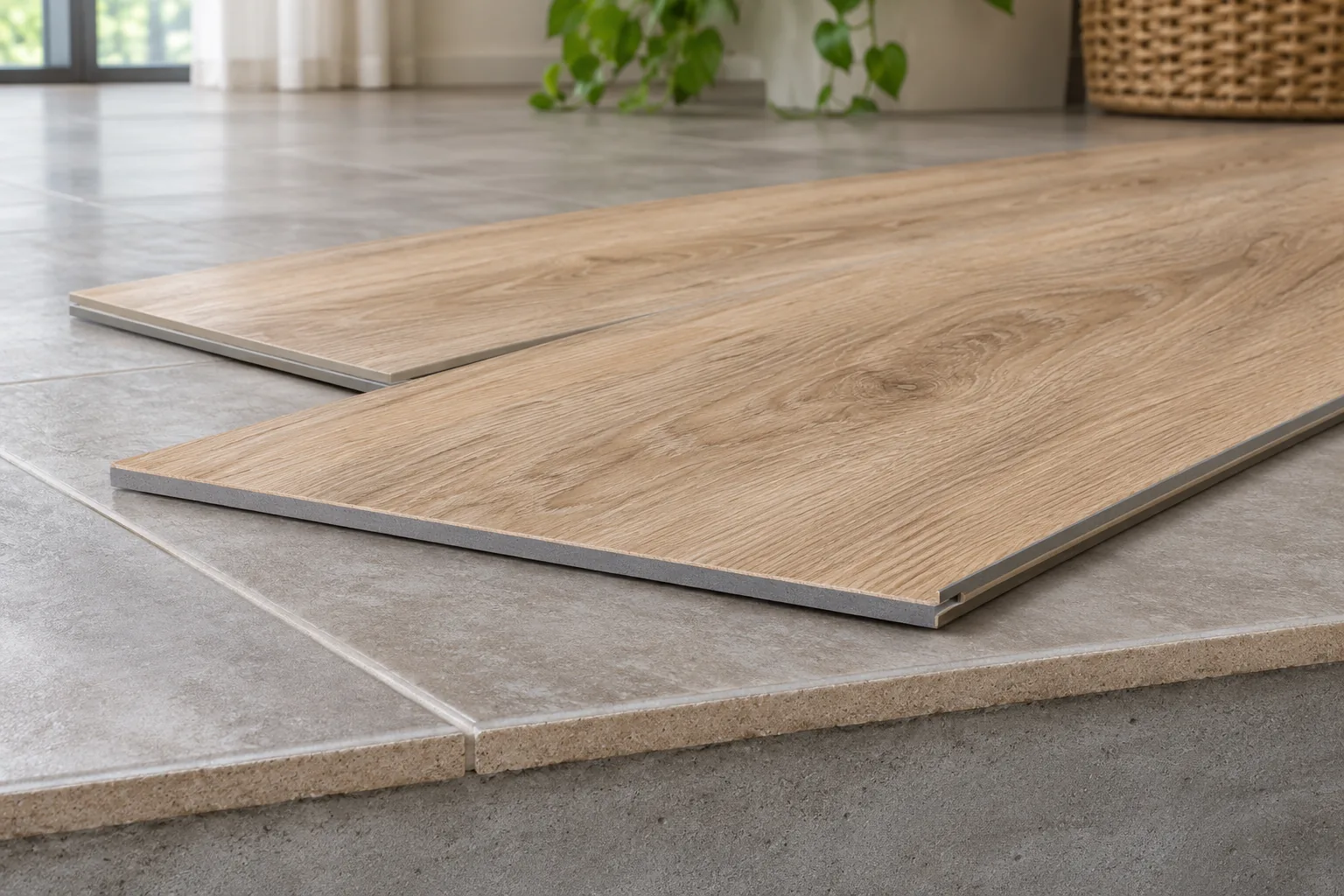
When you plan SPC flooring over tiles, the new surface is only part of the decision. Your existing ceramic floor may be able to stay, provided the selected SPC product permits that substrate and the tiled base meets its installation requirements.
For your renovation collection, resolve this before describing installation as a simple cover-over job. The condition of the old floor and the preparation required can change the work involved.
Check your tiles, grout and raised edges
Start with how firmly the existing tiles are attached. Movement, loose tiles and damaged areas need assessment before another floor covers them. The ROCKO Flooring User Manual, edition 01/2024 requires existing tile, terrazzo and stone floors to be firmly attached to the structural floor. It also requires a sound base without deflection.
Then separate three surface conditions:
- Recessed grout: the joint sits below the tile faces.
- Tile lippage: the edge of one tile stands above its neighbour.
- Wider dips or humps: the floor varies over a longer distance.
Record these separately. A photograph showing narrow joints cannot establish the flatness of the whole room, and filling a grout recess does not remove a raised tile edge.
Use the preparation rules for your exact SPC product
The ROCKO manual requires grout lines in ceramic tile and similar floors to be filled with a cementitious levelling and patching compound. Its installation summary also directs you to follow its subfloor flatness tolerances.
A different example appears in Karndean's 2G rigid-core installation guide for Australia and New Zealand, August 2023. It calls for grout lines wider and/or deeper than 5 mm to be levelled. The same guide requires loose tiles to be fixed and isolated high points or ridges to be removed.
That 5 mm figure belongs to the product and regional guide named above. Keep the applicable manufacturer's requirements with your selected range, including separate rules for grout, flatness and moisture. A limit copied from another rigid-core product cannot establish suitability for your collection.
Include the existing floor in your renovation brief
Before comparing SPC flooring options, give your supplier and installer the same description of the intended base. This makes the installation assumptions behind each offer easier to review.
| Part of your brief | What to record |
|---|---|
| Existing tiles | Tile type, attachment, damage and any movement identified during assessment |
| Surface measurements | Grout width and depth, raised edges and flatness measurements using the required method |
| Moisture conditions | The underlying substrate and the assessment required by the selected installation guide |
| Finished floor height | The complete SPC board, any required preparation, door clearance and transitions to adjoining floors |
| Product documents | The exact flooring reference, destination market and installation-guide revision |
Check the finished height early. Keeping the ceramic layer also keeps its height in the floor build-up. Add the complete proposed flooring and preparation when reviewing doors, thresholds and adjoining rooms.
You can use this information to decide whether a particular SPC construction fits your renovation programme and what preparation your installation channel must allow for. Keep that decision alongside the approved product specification so the showroom description, quotation and installation guidance tell the same story.
For your next range brief, include the existing ceramic substrate and intended renovation use together with the format, finish and destination market.