Specify the actual cells
Use a manufacturer-approved drawing and physical section sample. Confirm material, cell dimensions and face thickness.
Core / Cellular support For the trade
A cellular core direction for rigid decorative wall panels. Define the actual cell pattern, faces and edge details before comparing weight or stiffness with another construction.
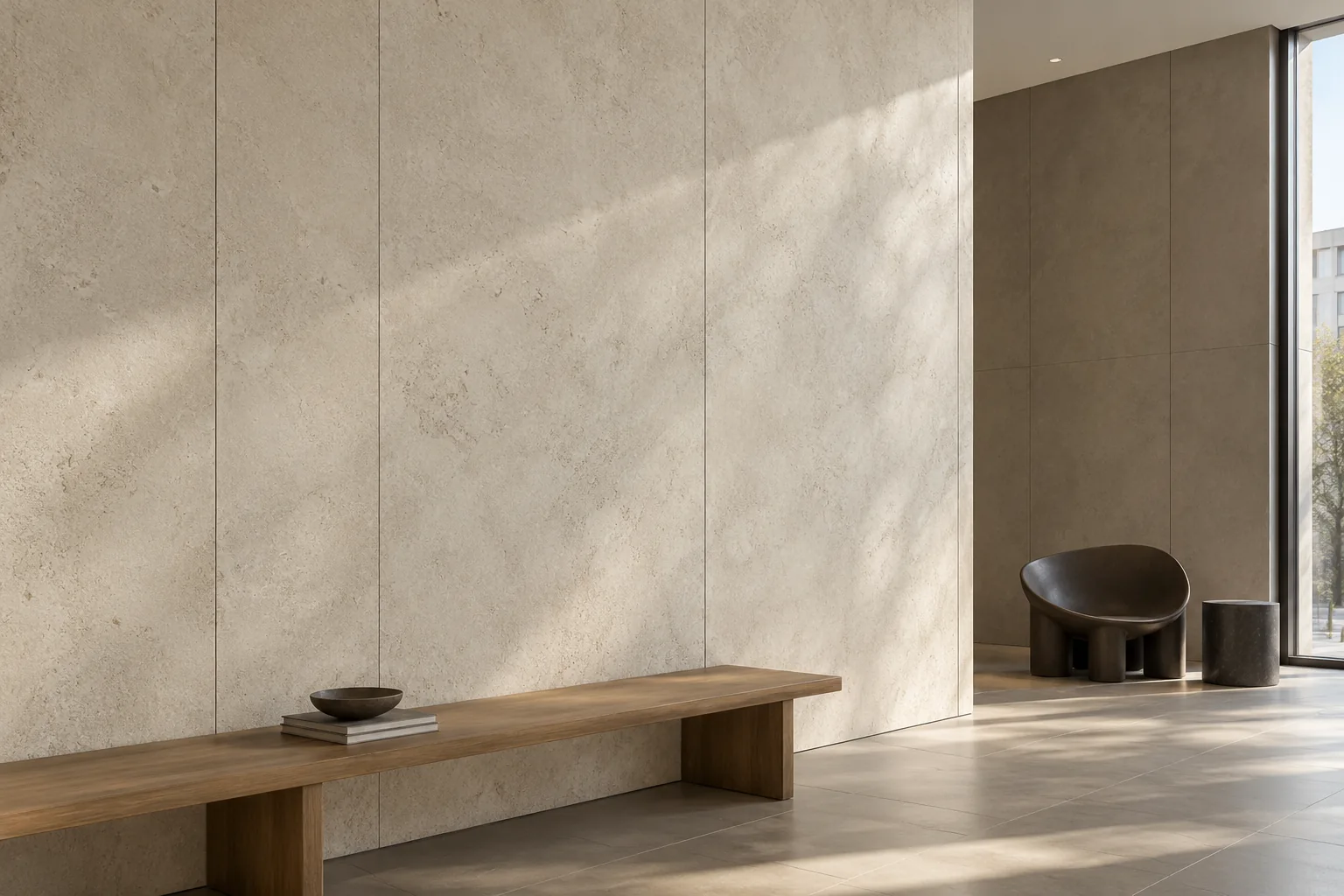
Honeycomb describes a cellular support concept. It does not by itself define one material recipe, cell geometry or panel strength. The actual board may differ significantly between production platforms.
For procurement, examine the face skins, internal support, thickness and how the edges are closed or profiled. Cut-outs, fixing locations and local support are especially important in a cellular panel.
Our programme development pairs the section with a decorative-film specification and the installer’s requirements. No universal structural or acoustic rating is implied by the honeycomb description.
Use a manufacturer-approved drawing and physical section sample. Confirm material, cell dimensions and face thickness.
The panel needs a defined joint, trim and cut-edge solution, including details around openings.
A useful quotation starts with the construction and the intended market. These are the decisions we work through with your product team.
Prepare your specification ↗| Decision | What to define |
|---|---|
| Core | Actual cellular layout, composition and material distribution. |
| Skins | Face and back thickness, decorative film and surface treatment. |
| Handling | Mass, support during cutting and protective packing. |
| Assembly | Joint, end closure, adhesive or fixings and substrate support. |
Questions from product teams
Not without comparable product data. Cell geometry, material and faces must be assessed under relevant tests.
The trade description is not precise enough to assume that. Confirm the actual support pattern from the section drawing.
Continue exploring
 Surface reference01
The established rigid PVC panel construction, developed as a defined section rather than a generic commodity board.
Explore the rangeSurface reference02A corrugated support direction beneath the decorative face.
Explore the rangeSurface reference03Bring a more considered visual language to rigid PVC panels.
Explore the rangeFrom product knowledge to a commercial range