Profile approval
Approve a joined panel sample and a section drawing. Review fit, opening, face alignment and the visual seam.
Connection / T&G systems For the trade
Define the joint as carefully as the panel face. A tongue-and-groove wall programme needs an approved profile, compatible sealing details and clear installation guidance.
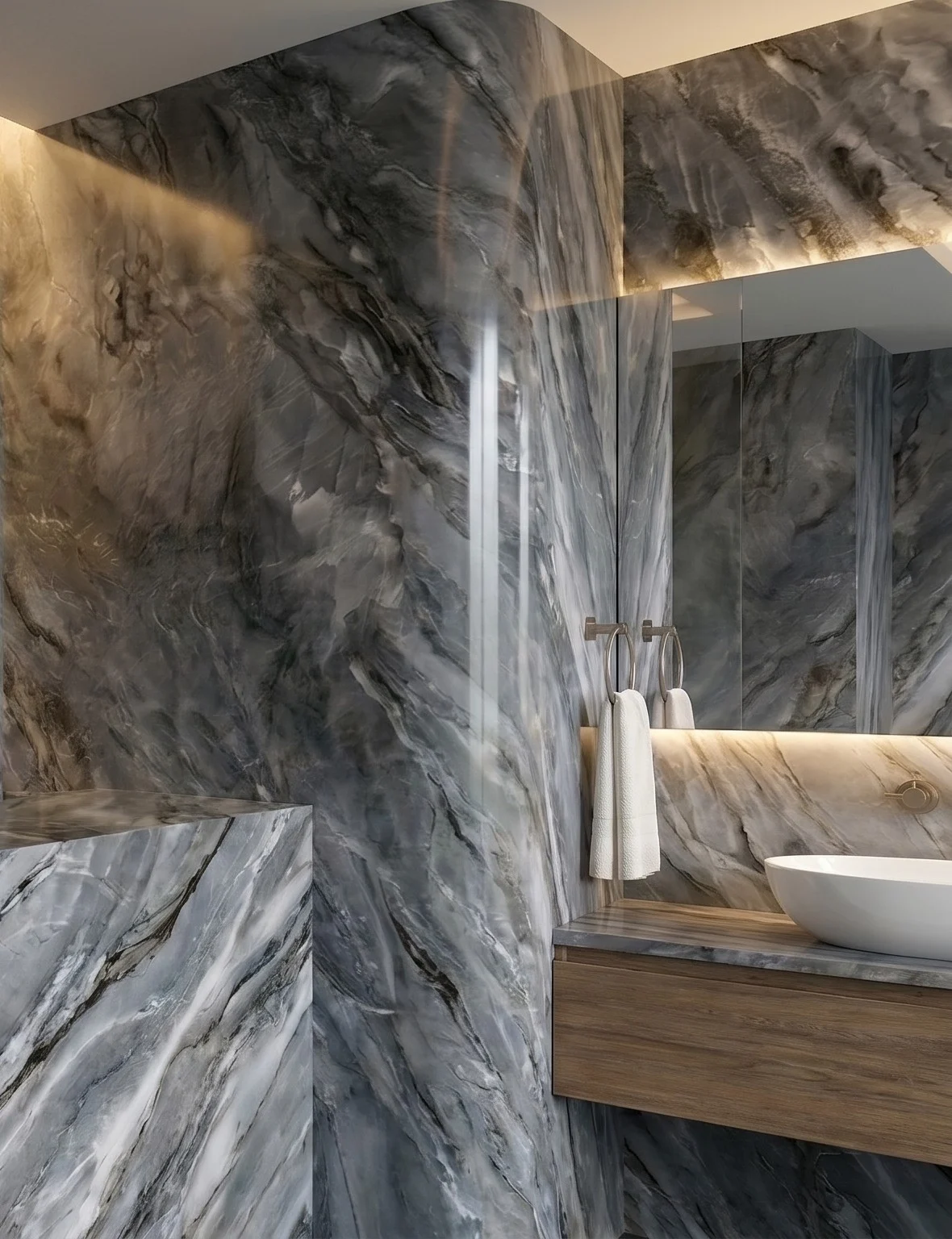
A tongue-and-groove connection uses a projecting tongue on one edge and a receiving groove on the next. The exact geometry, engagement and joint appearance differ between panel systems.
Our reinforced hybrid reference includes a profiled water-stop ridge within its T&G joint. The supplied technical sheet reports a 24-hour joint water-tightness test under the manufacturer’s protocol. That is a result for the tested joint, not an unlimited waterproofing guarantee.
The complete wall still needs correctly treated perimeters, corners, penetrations and transitions. Adhesive and sealing instructions must identify the actual panel, profile and intended wet- or dry-area assembly.
Approve a joined panel sample and a section drawing. Review fit, opening, face alignment and the visual seam.
Treat a ridge or barrier as part of a specified system. It does not remove the need to resolve the rest of the installation.
A useful quotation starts with the construction and the intended market. These are the decisions we work through with your product team.
Prepare your specification ↗| Decision | What to define |
|---|---|
| Geometry | Tongue, groove, joint depth and any integral water-stop detail. |
| Appearance | Seam width, face alignment and decor continuity. |
| Sealing | Approved joint and perimeter method for the intended application. |
| Evidence | Joint-specific testing and instructions matched to the supplied board. |
Questions from product teams
No. That depends on the actual geometry, materials, sealing method and tested assembly. The term tongue-and-groove is not a performance rating.
No. Follow the product-specific guidance for movement, perimeters, adhesive and substrate conditions.
Continue exploring
 Surface reference01
Mechanical connections for decorative wall-panel ranges.
Explore the range02A shower-panel programme needs more than a water-resistant board.
Explore the rangeSurface reference03A construction-specific reference for our nominal 950 × 2400 × 6 mm reinforced hybrid wall-panel programme.
Explore the rangeFrom product knowledge to a commercial range