Approve a range of appearances
Keep an agreed reference set showing the accepted colour variation. One small chip cannot represent every tone in a multi-tonal board.
Outdoor / Colour and grain development For the trade
A richer colour direction within a defined composite platform. Develop the tone variation, grain and surface finish as part of a coherent outdoor collection.
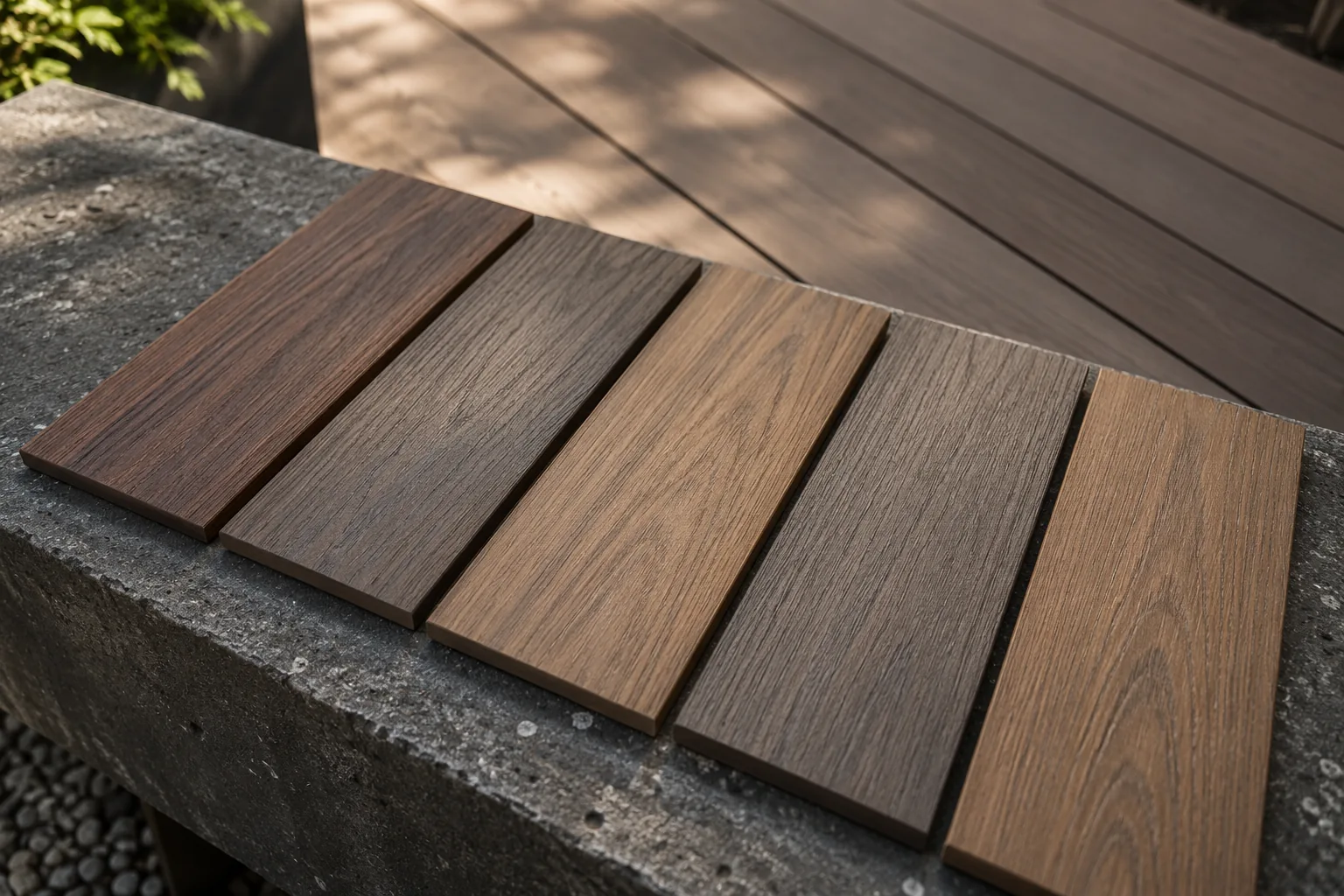
Dual-tone composite decking introduces more than one colour tone into the appearance of a board. The result can create a less uniform visual rhythm than a single-colour profile, depending on the production and finishing route.
Colour treatment and cap construction are separate decisions. A dual-tone board may belong to an uncapped or a capped platform; the actual material and section must be confirmed in the product specification.
We approve the range on several full-size boards, looking at tone contrast, pattern repeat, texture and the way adjacent boards work together. Expected weathering and batch variation should be described consistently in samples and distributor materials.
Keep an agreed reference set showing the accepted colour variation. One small chip cannot represent every tone in a multi-tonal board.
Specify the core, cap if present, profile and finish independently. A surface colour description does not establish the material or performance.
A useful quotation starts with the construction and the intended market. These are the decisions we work through with your product team.
Prepare your specification ↗| Decision | What to define |
|---|---|
| Colour standard | Base and contrasting tones, accepted variation and full-board reference set. |
| Surface | Embossing or brushing, gloss and grain character. |
| Construction | Core, cap or uncapped surface and actual solid or hollow section. |
| Consistency | Batch identification, sampling and the documented weathering appearance. |
Questions from product teams
No. It is a colour and appearance direction. Specify the underlying construction and surface system separately.
Not necessarily. The purpose may be controlled variation, but the acceptable range needs approval so that natural-looking diversity is not confused with an out-of-standard batch.
Continue exploring
 Surface reference01
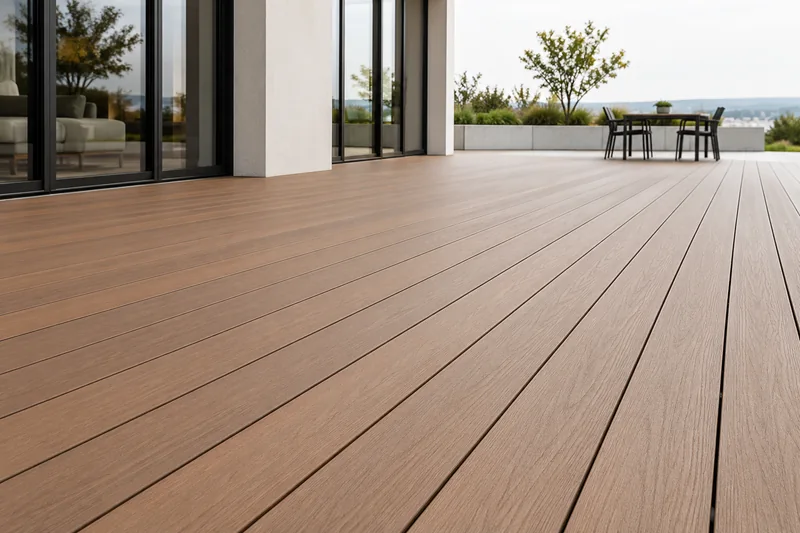
An uncapped wood- or bamboo-polymer composite direction for exterior decking collections.
Explore the range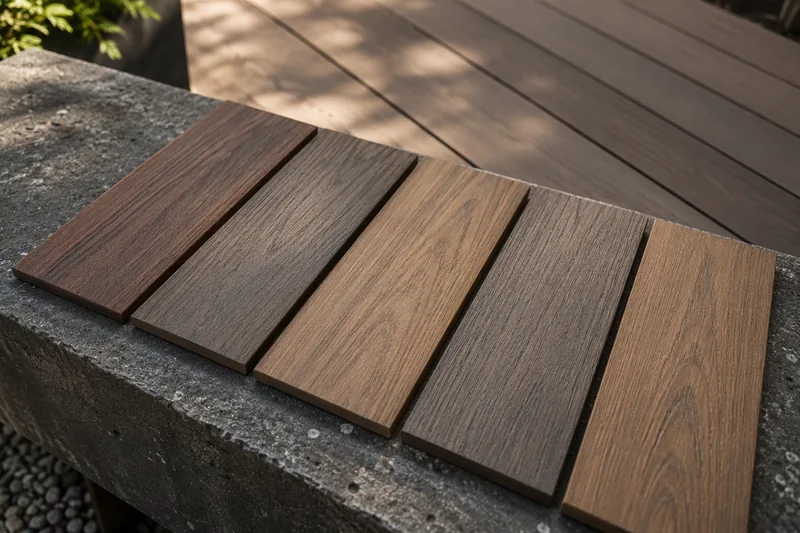 Surface reference02
A composite core with a defined outer cap.
Explore the rangeSurface reference03Turn board supply into a coordinated outdoor range.
Explore the rangeFrom product knowledge to a commercial range