Check the whole perimeter
Confirm where the cap is present and how cut ends and edge details are treated.
Outdoor / Co-extruded surface For the trade
A composite core with a defined outer cap. Build the decking proposition around the actual cap coverage, surface quality and compatible profile rather than a generation label.
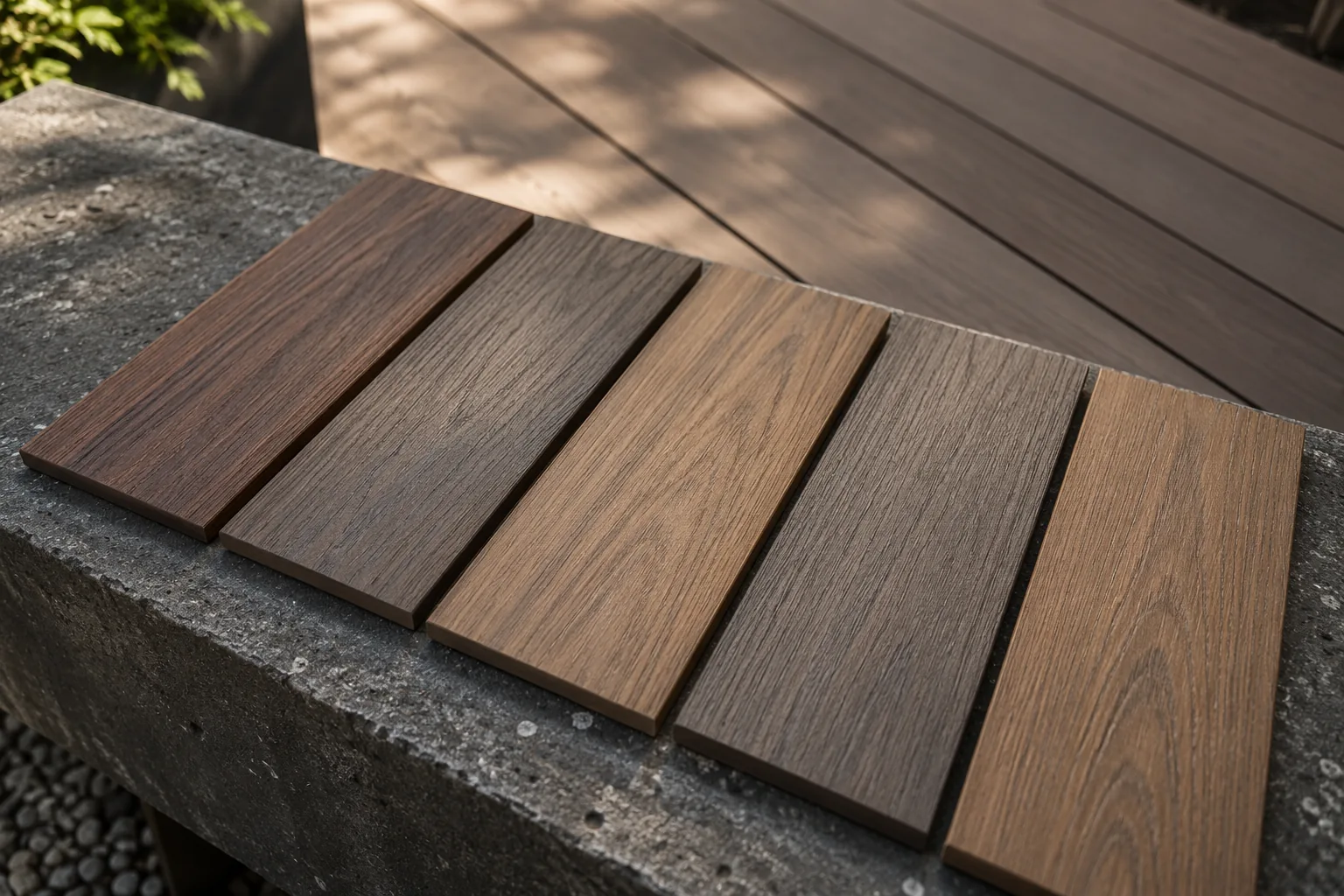
Co-extruded decking combines the core with an outer surface layer during production. The chosen cap can change cleaning behaviour, appearance and exposure response compared with an uncapped composite.
Cap coverage and thickness vary. Some profiles have different face and edge arrangements, and reversible boards require their own surface approval. A cut edge is still an important installation detail.
We specify the core, cap, profile and colour direction together. Weathering, stain, slip and fire claims need product-specific evidence; terms such as second generation do not establish a uniform performance standard.
Confirm where the cap is present and how cut ends and edge details are treated.
Review embossing, gloss, colour variation and the actual profile supporting the capped face.
A useful quotation starts with the construction and the intended market. These are the decisions we work through with your product team.
Prepare your specification ↗| Decision | What to define |
|---|---|
| Cap | Polymer type, thickness, coverage and adhesion to the core. |
| Profile | Dimensions, mass, solid/hollow construction and board reversibility. |
| Appearance | Colour direction, grain, embossing and batch standard. |
| Evidence | Applicable weathering, stain, slip and mechanical performance for the selected board. |
Questions from product teams
Not necessarily. Confirm actual cap coverage from the product drawing and sample.
No universal guarantee follows from the construction name. Follow the tested product scope, exposure limits and care guidance.
Continue exploring
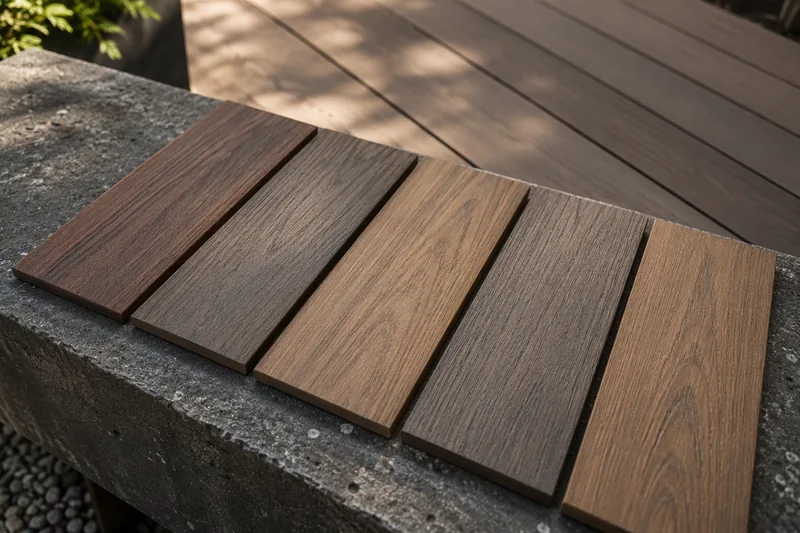 Surface reference01
Explore an ASA outer-surface route within a defined exterior composite system.
Explore the rangeSurface reference02A PMMA-film surface direction for exterior composite boards.
Explore the range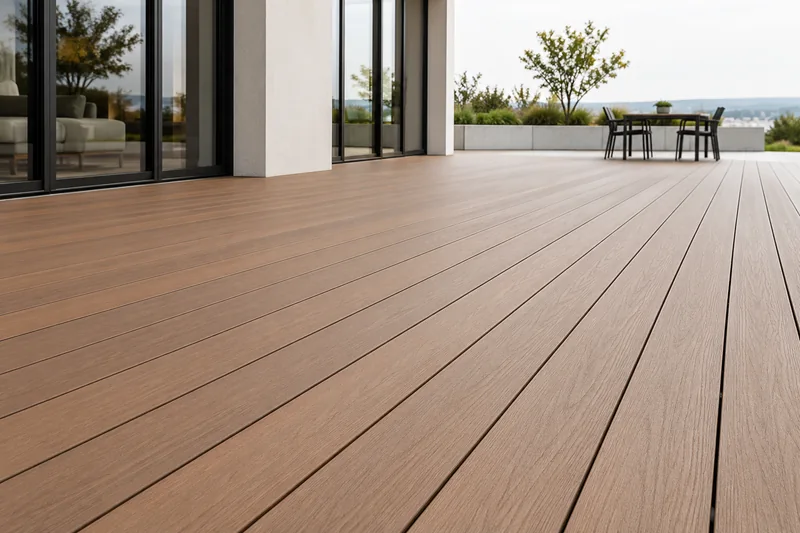 Surface reference03
An uncapped wood- or bamboo-polymer composite direction for exterior decking collections.
Explore the rangeFrom product knowledge to a commercial range