An honest surface proposition
Set expectations around the chosen formulation and finish. Do not transfer capped-board stain or colour claims to an uncapped profile.
Outdoor / Uncapped composite For the trade
An uncapped wood- or bamboo-polymer composite direction for exterior decking collections. Define the profile, texture and expected weathering as part of the commercial range.
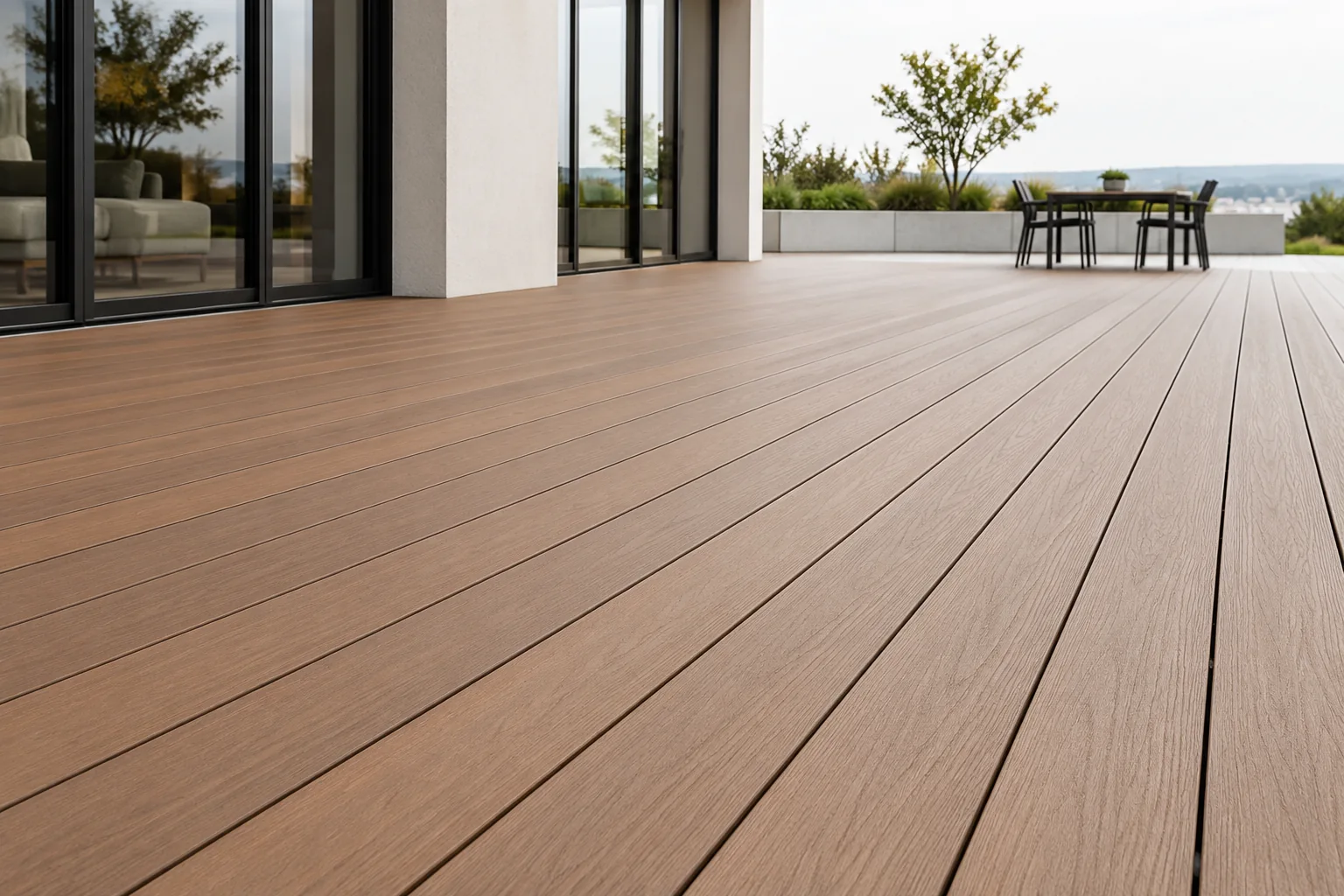
Traditional WPC decking exposes the composite material at the surface rather than enclosing it in a separate protective cap. Wood or bamboo fibre and polymer are combined within the selected formulation.
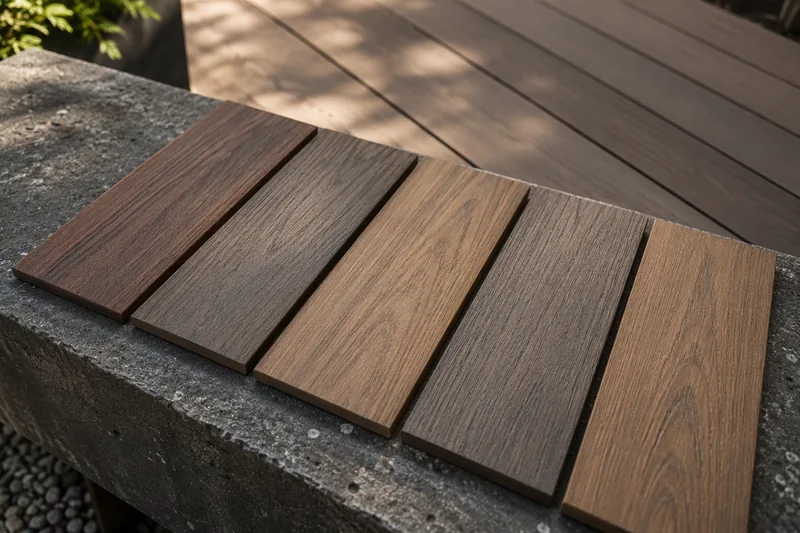
Surface brushing, embossing and colour choices change the appearance and feel of the board. Dual-tone directions can be developed, but they do not by themselves imply a capped construction.
Specify the actual composition, dimensions, solid or hollow section and approved installation method. Initial colour, expected weathering and cleaning guidance should be explained consistently in distributor materials.
Set expectations around the chosen formulation and finish. Do not transfer capped-board stain or colour claims to an uncapped profile.
Approve colour, brushing, embossing and natural-looking variation across several boards, not only a small chip.
A useful quotation starts with the construction and the intended market. These are the decisions we work through with your product team.
Prepare your specification ↗| Decision | What to define |
|---|---|
| Material | Wood- or bamboo-polymer formulation and actual mass. |
| Section | Solid, round-hollow or square-hollow option, where offered for the range. |
| Surface | Brushed, embossed or dual-tone direction with an approval standard. |
| Use and care | Approved support, movement allowances, cleaning and weathering guidance. |
Questions from product teams
No. Colour variation and a separate cap are different features. Ask for the actual section and material description.
Do not assume that. Support and span guidance must match the actual profile and intended use.
Continue exploring
 Surface reference01
A composite core with a defined outer cap.
Explore the rangeSurface reference02Compare solid, round-hollow and square-hollow composite sections on the actual product.
Explore the range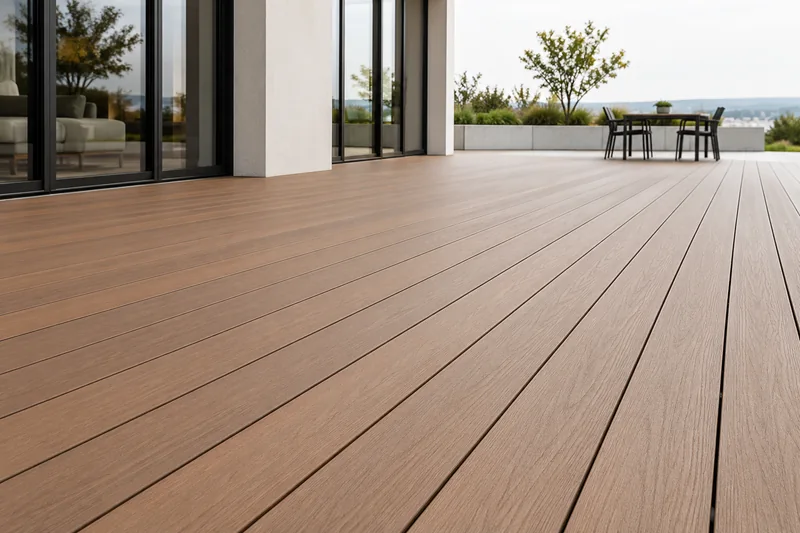 Surface reference03
Turn board supply into a coordinated outdoor range.
Explore the rangeFrom product knowledge to a commercial range