Make comparisons like for like
Align material formulation, dimensions, surface construction and intended use before comparing profile options.
Profile / Material and support For the trade
Compare solid, round-hollow and square-hollow composite sections on the actual product. Profile geometry affects mass, edge details and the approved installation system.
A solid decking profile and a hollow profile distribute material differently. Round and square cavities are also distinct arrangements, with different wall and web geometries.
Profile selection should account for use, support conditions, fixing, handling and end treatment. Hollow does not automatically mean inadequate, and solid does not establish a universal span or load rating.
For a distributor programme, compare actual mass, usable coverage, carton or pallet packing and the complete accessory requirement. Evaluate finished profiles with the relevant test and installation data.
Align material formulation, dimensions, surface construction and intended use before comparing profile options.
A hollow section may need end caps, fascia or a different perimeter detail. Include those components in the commercial calculation.
A useful quotation starts with the construction and the intended market. These are the decisions we work through with your product team.
Prepare your specification ↗| Decision | What to define |
|---|---|
| Solid | Defined material throughout the profile; confirm mass and support guidance. |
| Round-hollow | Circular cavities with specified wall and web thicknesses. |
| Square-hollow | Rectangular cavity layout with its own support and edge detail. |
| System | Approved joist spacing, fixing method, movement gaps and end treatment. |
Questions from product teams
The appropriate choice depends on the specific product and application. Compare evidence and system requirements rather than treating one section label as universally better.
No. Internal geometry is a significant part of the construction and can change mass, behaviour and installation details.
Continue exploring
 Surface reference01
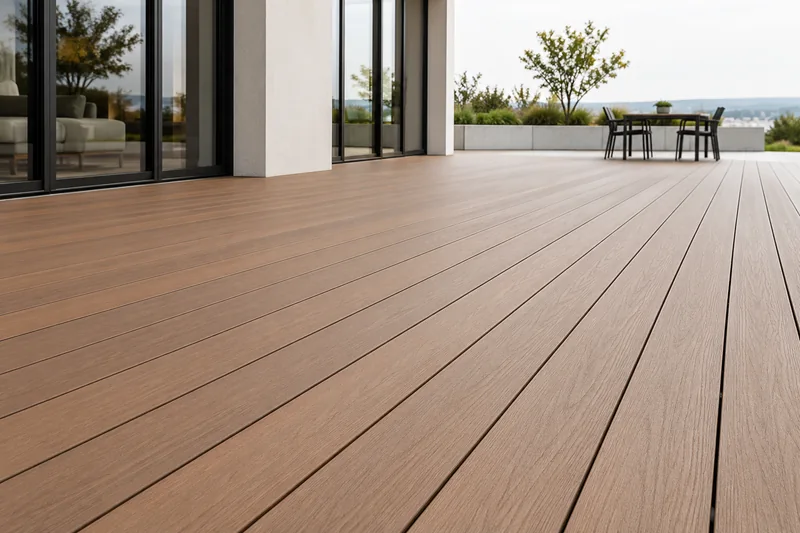
An uncapped wood- or bamboo-polymer composite direction for exterior decking collections.
Explore the range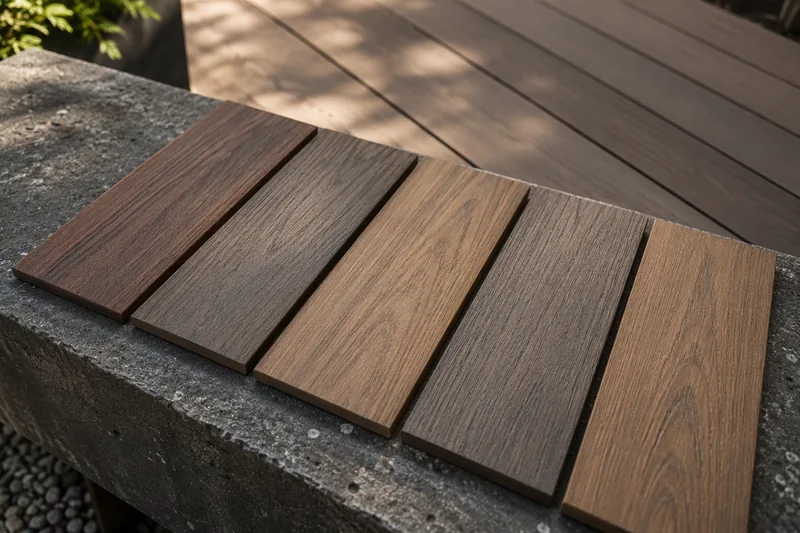 Surface reference02
A composite core with a defined outer cap.
Explore the rangeSurface reference03Turn board supply into a coordinated outdoor range.
Explore the rangeFrom product knowledge to a commercial range