A/B stock
Two plank types require an explicit ordering ratio, clear carton identification and a replacement-stock plan.
Pattern / Range development For the trade
A pattern collection is also a logistics decision. Compare traditional A/B boards with universal-plank systems before defining your herringbone programme.
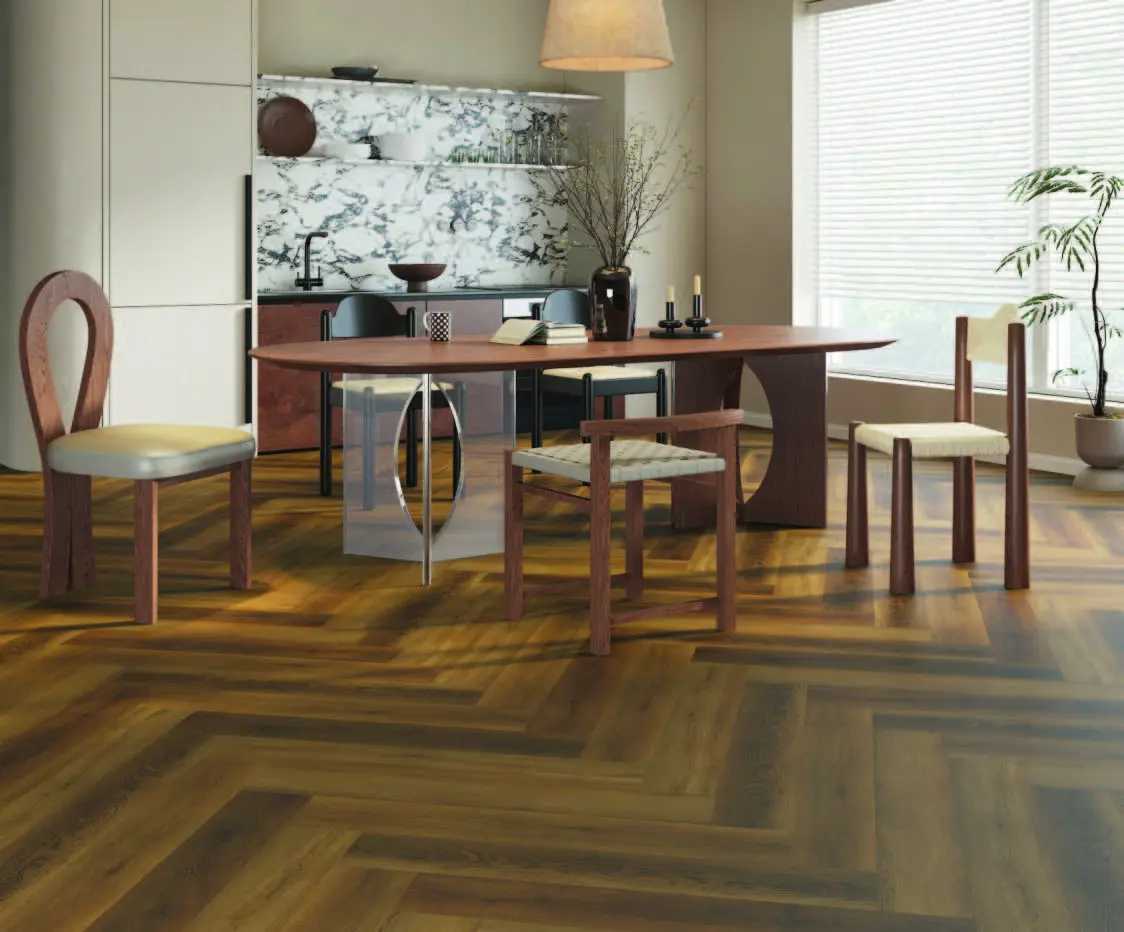
Herringbone arranges rectangular boards in a repeating zigzag. In click flooring, the edge geometry must support that arrangement; a straight-plank connection cannot simply be relabelled as herringbone.
A/B systems use two complementary plank types. Universal systems use one plank type with a connection designed for the pattern. Both require an approved installation layout, the right starting method and clear packaging.
We develop the pattern as part of your collection: decor scale, plank proportion, bevel, surface registration and colour consistency. Review a laid sample rather than judging a single loose board.
Two plank types require an explicit ordering ratio, clear carton identification and a replacement-stock plan.
One plank type simplifies item handling, while the chosen connection determines the installation sequence and permitted layouts.
Explore the possibilities
Go beyond the category name. Explore the constructions, connections and finishes that shape your collection.
A useful quotation starts with the construction and the intended market. These are the decisions we work through with your product team.
Prepare your specification ↗| Decision | What to define |
|---|---|
| Pattern system | A/B or universal; exact connection and instructions. |
| Proportion | Plank length and width, decor scale and pattern density. |
| Surface | Registered embossing, gloss, bevel and joint visibility. |
| Logistics | Carton identification, A/B ratio if relevant, spares and batch controls. |
Questions from product teams
No. Standard herringbone uses rectangular boards meeting at right angles. Chevron uses angled ends to create a continuous V. Specify the actual pattern.
A coordinated look can be developed, but the smaller pattern format changes how grain, repeat and embossing are perceived. Approve each format separately.
Continue exploring
01A proven herringbone format with two plank types.
Explore the range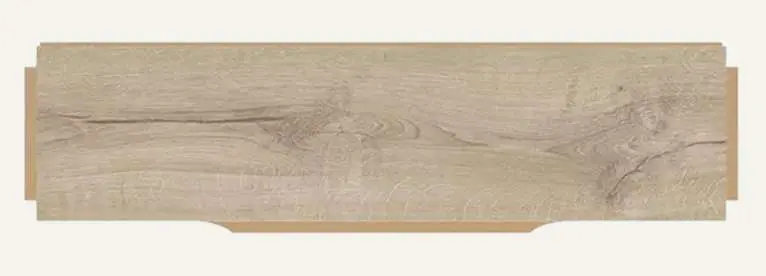 02
One plank type, engineered for a herringbone layout.
Explore the range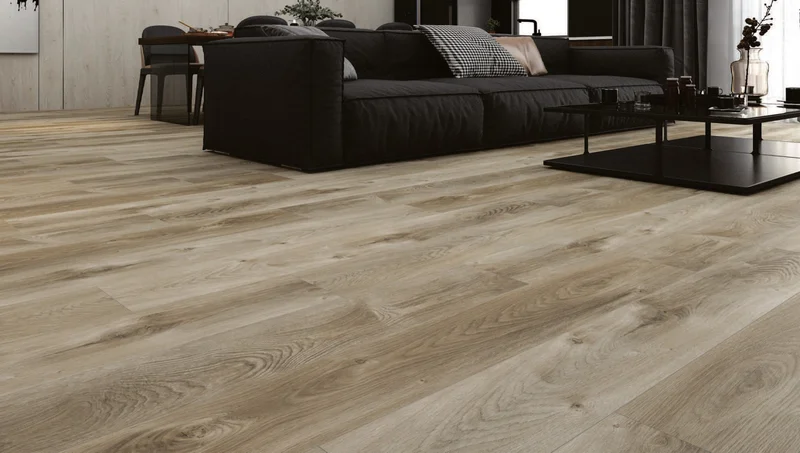 Surface reference03
Unilin, Välinge and i4F describe technology platforms, not interchangeable board specifications.
Explore the rangeFrom product knowledge to a commercial range