Plan the item structure
Decide how A and B boards are ordered, packed and stocked. Agree the ratio required for the approved pattern.
Pattern / Two complementary planks For the trade
A proven herringbone format with two plank types. Build a programme with clear A/B identification, controlled production batches and an installation guide that matches the supplied board.
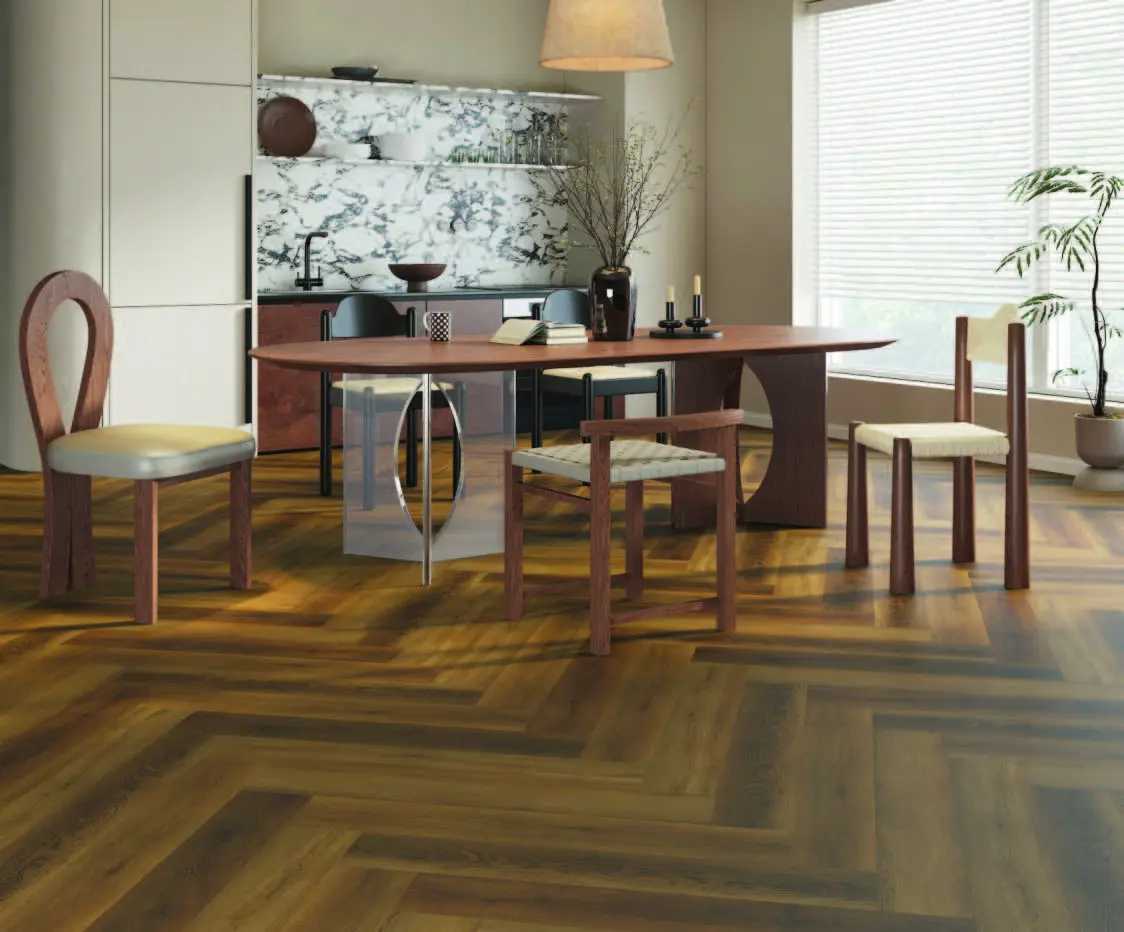
An A/B herringbone system uses complementary edge profiles, usually described as left and right boards. Their connection geometry allows the short edge of one board to meet the long edge of the next in the intended pattern.
The commercial specification must describe more than board dimensions. A/B allocation, carton markings and replacement availability affect the distributor and the installer long after the initial container arrives.
We review assembled samples to confirm the pattern, the joint, the visual balance and the actual installation sequence. Packaging artwork should make the two plank types obvious without relying only on small labels.
Decide how A and B boards are ordered, packed and stocked. Agree the ratio required for the approved pattern.
Check opening, height difference, decor distribution and fit across multiple boards, including material from different cartons in the same batch.
A useful quotation starts with the construction and the intended market. These are the decisions we work through with your product team.
Prepare your specification ↗| Decision | What to define |
|---|---|
| Board identification | A/B marks on the board or carton, aligned with the installation guide. |
| Packing arrangement | Separate or combined cartons and the agreed ordering ratio. |
| Core and connection | Selected thickness, profiled geometry and connection technology. |
| After-sales stock | Keep compatible replacement stock and record the batch and profile version. |
Questions from product teams
Generally no: the profiles are complementary. Follow the actual system instructions rather than assuming they are interchangeable.
The number of board types is an installation and stock choice. Surface quality, construction and machining determine the finished product; the label alone does not rank quality.
Continue exploring
 01
One plank type, engineered for a herringbone layout.
Explore the range Surface reference02
From straight-plank connections to 5G herringbone systems, the installation concept needs to fit the range.
Explore the range 03
Premium is a specification, not a thicker board with a new label.
Explore the rangeFrom product knowledge to a commercial range